Why $\epsilon\text{-}\delta$? The Foundational Crisis of Calculus
The $\epsilon,\delta$-definition of a limit is the result of a 200-year foundational crisis. For the first century and a half after Isaac Newton and Gottfried Wilhelm Leibniz invented calculus, the subject was an embarrassing paradox: it was the most successful scientific tool in human history, yet its logical foundations rested on a blatant algebraic contradiction.
The history of $\epsilon,\delta$ is the story of how 19th-century mathematicians—led by Bernard Bolzano, Augustin-Louis Cauchy, and Karl Weierstrass—rescued mathematics by banishing the fuzzy ideas of time, motion, and "infinitely small quantities," replacing them with static inequalities and the adversarial game of tolerances you teach today.
Act I: The Scandal of the Infinitesimal (1665–1734)
When Newton (in the 1660s) and Leibniz (in the 1670s) independently developed calculus, they needed to calculate instantaneous rates of change—the slope of a tangent line at a single point.
To find the derivative of $f(x)=x^2$, they added a tiny increment $\Delta x$ (which Leibniz called an infinitesimal $dx$ and Newton called a moment of a fluent) and computed the ratio of differences:
Here, they performed a sleight of hand that haunted mathematicians for 150 years:
To find the derivative of $f(x)=x^2$, they added a tiny increment $\Delta x$ (which Leibniz called an infinitesimal $dx$ and Newton called a moment of a fluent) and computed the ratio of differences.
The Algebraic Breakdown
Here is exactly what happens in the algebra before the illegal division step:
-
The Setup: You start with the slope formula comparing the point at $x$ and the point slightly further down the curve at $x + \Delta x$.
$$ \text{Slope} = \frac{\text{Rise}}{\text{Run}} = \frac{(x+\Delta x)^2 - x^2}{\Delta x} $$
-
The Expansion: Expand the squared binomial in the numerator.
$$ \frac{x^2 + 2x\Delta x + (\Delta x)^2 - x^2}{\Delta x} $$
-
The Subtraction: The $x^2$ and $-x^2$ cancel out.
$$ \frac{2x\Delta x + (\Delta x)^2}{\Delta x} $$
-
The Factoring (The Crucial Step): Because every remaining term in the numerator contains a $\Delta x$, you can factor it out.
$$ \frac{\Delta x \cdot (2x + \Delta x)}{\Delta x} $$
To get from $\frac{\Delta x \cdot (2x + \Delta x)}{\Delta x}$ to just $2x + \Delta x$, Newton and Leibniz crossed out the $\Delta x$ on the top and the bottom.
Mathematically, crossing out those terms is exactly the same as dividing by $\Delta x$. You are asserting that $\frac{\Delta x}{\Delta x} = 1$.
This is perfectly legal if and only if $\Delta x$ is a real, non-zero number (like $0.1$ or $0.00001$). If $\Delta x = 0$, you are evaluating $\frac{0}{0}$, which is undefined mathematical nonsense.
To calculate the slope of the secant line, you must construct a right triangle. The base of this triangle is the increment $\Delta x$. As long as $\Delta x > 0$, the division $\frac{\Delta x}{\Delta x} = 1$ is legal. But if $\Delta x$ shrinks to exactly $0$, the triangle collapses into a single dot, destroying the "Run" and making division impossible.
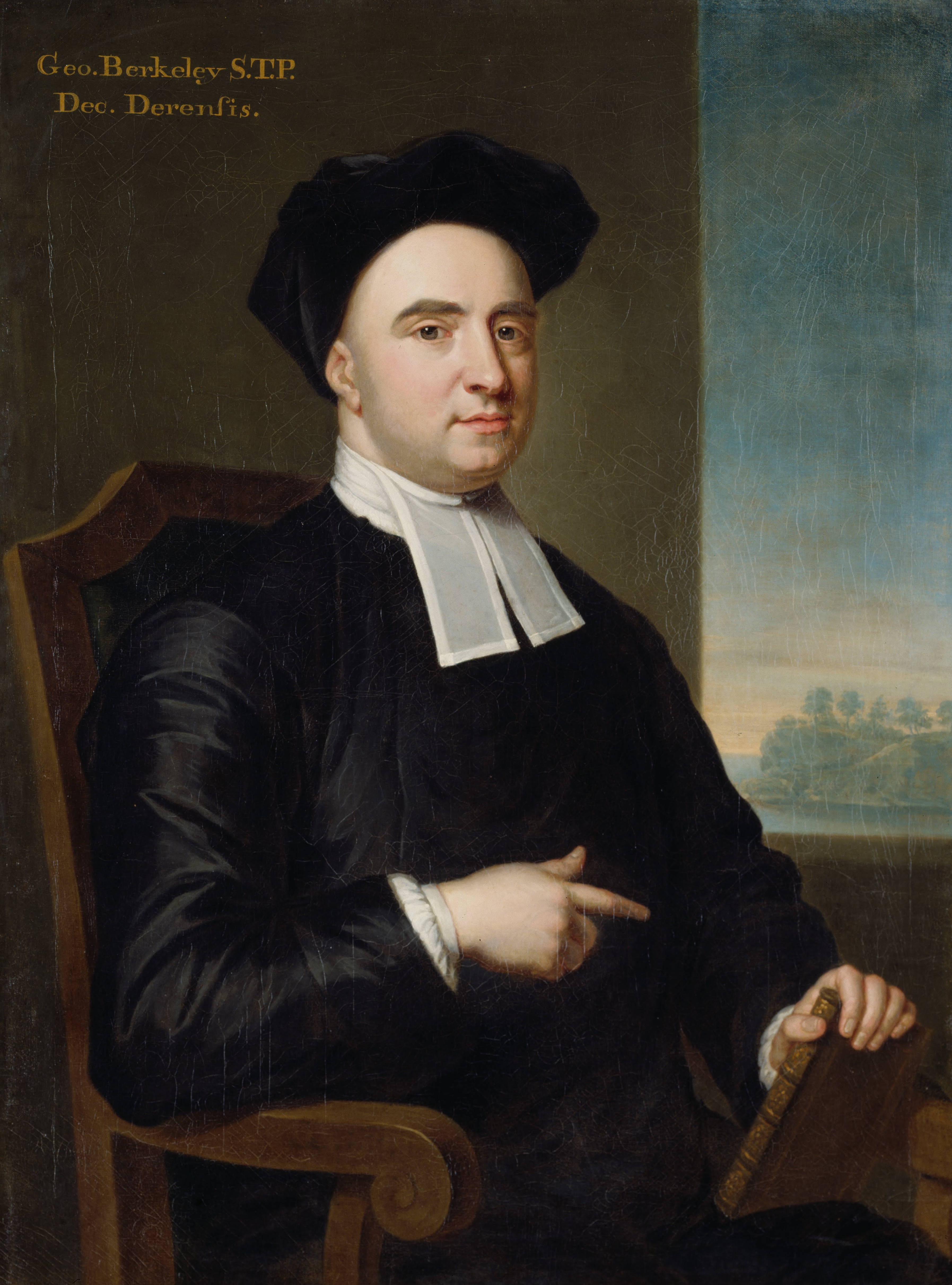
In 1734, the Anglo-Irish philosopher and bishop George Berkeley published a devastating pamphlet titled The Analyst: A Discourse Addressed to an Infidel Mathematician. Berkeley pointed out that mathematicians were mocking theologians for believing in mysteries of faith while relying on an illegal algebraic trick—treating $\Delta x$ as non-zero when convenient for division, and zero a line later when convenient for simplification.
Berkeley famously mocked these vanishing increments in one of the most celebrated passages in the history of mathematics:
“And what are these same evanescent increments? They are neither finite quantities, nor quantities infinitely small, nor yet nothing. May we not call them the ghosts of departed quantities?”
Mathematicians knew Berkeley was right. Calculus worked in physics and astronomy, but nobody could explain why without violating the laws of logic.
Act II: False Starts and Fourier's Shockwave (1754–1822)
Throughout the late 18th century, Europe's best mathematicians tried to patch the hole Berkeley had exposed:
- Jean le Rond d'Alembert (1765): Writing the entry on Limite for the French Encyclopédie, d'Alembert argued that calculus should be founded on limits, not infinitesimals. He defined a limit verbally: one magnitude is the limit of another if the second can approach the first "closer than by any given magnitude." This was the ancestor of $\epsilon$, but it still relied on the vague, physical metaphor of a variable "moving" or "approaching."
- Joseph-Louis Lagrange (1797): Disgusted by both infinitesimals and the fuzzy word "approaches," Lagrange tried to banish limits from calculus entirely. He proposed that every function could be written as an infinite Taylor power series, defining derivatives simply as the coefficients of that series. (Cauchy later shattered Lagrange's dream in 1822 by showing that $f(x)=e^{-1/x^2}$ has all zero derivatives at $x=0$, meaning its Taylor series fails to represent the function).
The Breaking Point: Joseph Fourier (1807–1822)
The crisis reached a boiling point when Joseph Fourier submitted his work on heat conduction. Fourier demonstrated that a jagged, discontinuous square wave could be represented as an infinite sum of smooth, continuous sine and cosine waves:
This sent shockwaves through mathematics. Up to that point, mathematicians relied on geometric intuition—believing a "function" was a smooth curve you could draw with a pencil. Fourier's series proved that infinite processes could turn smooth curves into broken steps, and that visual intuition was completely unreliable. Mathematicians realized they needed an ironclad, purely arithmetic test for when a sequence or function converged.
Act III: Bolzano and Cauchy Forge the Metric Toolkit (1817–1823)
1. Bernard Bolzano: The Isolated Pioneer (1817)
The first person to strip physical motion out of continuity and limits was Bernard Bolzano, a Catholic priest, philosopher, and mathematician working in Prague. In an 1817 pamphlet proving the Intermediate Value Theorem (Rein analytischer Beweis), Bolzano defined what it means for a function $f(x)$ to be continuous at $x$: the difference $|f(x+\omega)-f(x)|$ can be made smaller than any given fraction $1/N$ provided $\omega$ is taken sufficiently small.
Bolzano had invented the $\epsilon,\delta$ concept in everything but the Greek letters. However, because he was working in relative isolation in Prague—and was soon censored and stripped of his university chair by the Austrian Habsburg authorities for his pacifist and socially progressive sermons—his mathematical work went largely unread for half a century.
2. Augustin-Louis Cauchy: Why We Use $\epsilon$ and $\delta$ (1821–1823)
Meanwhile, in Paris, Augustin-Louis Cauchy was tasked with teaching introductory analysis to engineering students at the École Polytechnique. Dissatisfied with the hand-waving in existing textbooks, Cauchy published two landmark works: Cours d'Analyse (1821) and Résumé des leçons sur le calcul infinitésimal (1823).
It is in Cauchy's 1823 lectures on derivatives that the symbols $\epsilon$ and $\delta$ first appear together in their modern roles:
- $\epsilon$ (Epsilon) stood for the French word erreur (error)—the maximum allowable error tolerance around the target output.
- $\delta$ (Delta) stood for the French word distance—the maximum allowable distance in the input variable $x$.
Although Cauchy introduced the symbols $\epsilon$ and $\delta$ and used inequalities to prove theorems, he did not fully let go of kinetic language. In his definitions, he still wrote that a variable "approaches indefinitely" a fixed value.
Because Cauchy wrote his definitions in flowing French prose rather than strict quantifier order, he famously fell into a trap: Cauchy's Sum Theorem (1821). Cauchy "proved" that if a series of continuous functions converges at every point, the resulting sum function must also be continuous.
Five years later, the young Norwegian mathematician Niels Henrik Abel pointed out that Fourier's sine series was a counterexample—a sum of continuous sine waves that converged to a discontinuous sawtooth wave! Why did Cauchy's proof fail? Because without explicit quantifier order, Cauchy couldn't see the difference between:
- Pointwise convergence ($\forall x\,\forall\epsilon\,\exists N$): where the cutoff $N$ depends on both $\epsilon$ and the point $x$.
- Uniform convergence ($\forall\epsilon\,\exists N\,\forall x$): where a single cutoff $N$ works for all $x$ simultaneously.
Act IV: Karl Weierstrass and the Static Revolution (1850s–1872)
The final architect who gave us the exact $\epsilon,\delta$ and $\epsilon,N$ definitions we teach today was Karl Weierstrass.
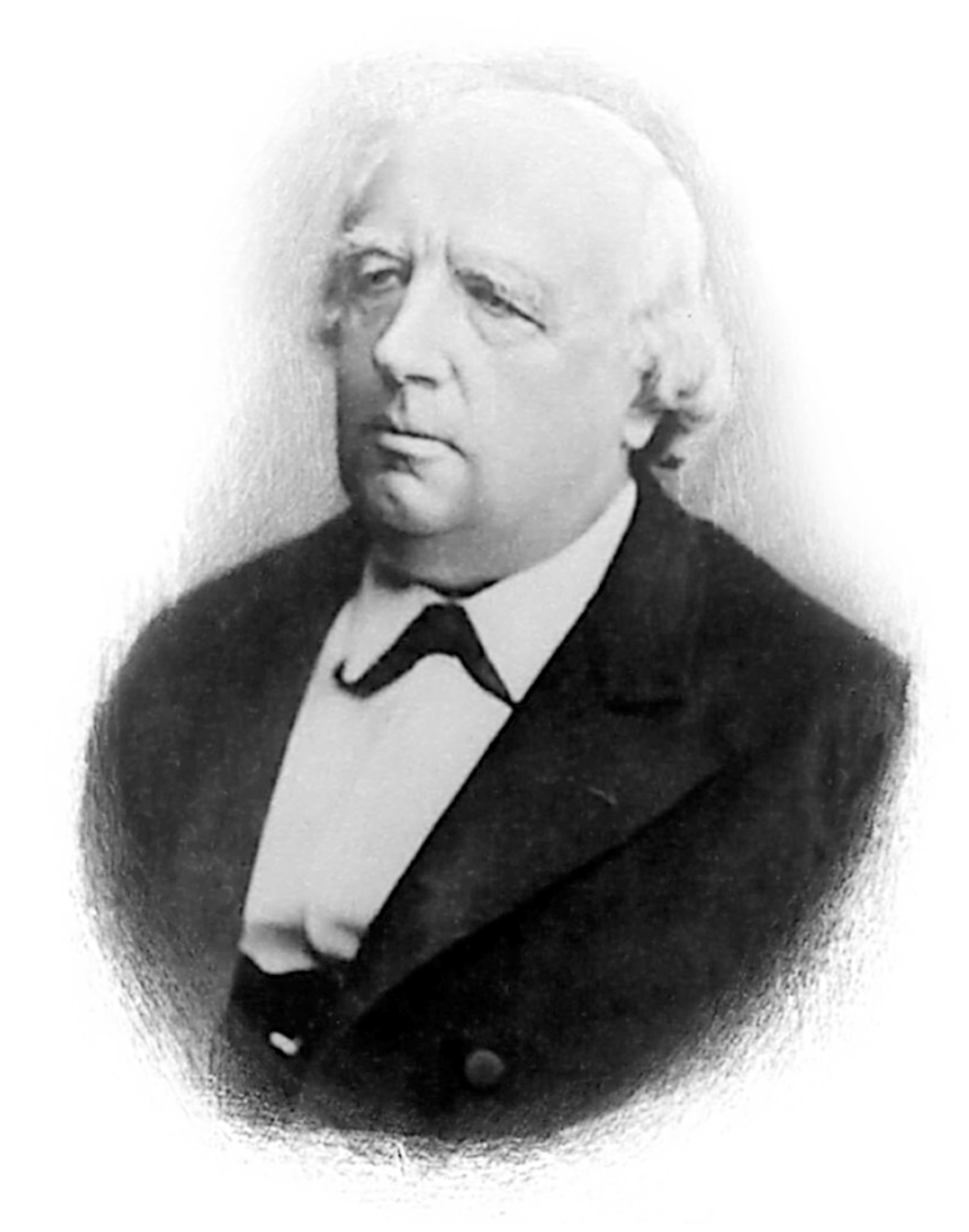
Karl Weierstrass, known as the "father of modern analysis," established the modern $\epsilon,\delta$ quantifier architecture through his rigorous Berlin lectures. His path to mathematics is legendary: sent to university to study law and finance, he spent four years fencing and drinking in beer halls before training as a secondary school teacher. After spending fifteen years teaching high school subjects in obscure Prussian country towns, he secretly published groundbreaking research in 1854 that earned him a professorship at the University of Berlin in 1856.
Weierstrass's path to mathematics is legendary. Sent to university by his father to study law and finance, he spent four years fencing and drinking in beer halls, leaving without a degree. He then trained as a secondary school teacher and spent nearly fifteen years in obscure Prussian country towns teaching high school mathematics, physics, German, geography, handwriting, and gymnastics—while secretly doing world-changing research on abelian functions by candlelight at night.
When he finally published a paper in 1854, the mathematical world was stunned, and he was appointed to a professorship at the University of Berlin in 1856.
Banishing Time and Motion (1859–1860s)
In his Berlin lectures on calculus and function theory (especially his 1859–1860 course Einleitung in die Theorie der analytischen Funktionen), Weierstrass diagnosed the exact bug in Cauchy's work: the word "approaches."
Weierstrass realized that phrases like "as $x$ approaches $a$" or "gets closer and closer" smuggle time and physical motion into pure mathematics. Numbers on the real line do not move. The number 3 is not crawling toward the number 4.
Weierstrass eliminated all kinetic verbs and replaced them with static logical containment, locking in the strict left-to-right quantifier order:
In Weierstrass's formulation:
- Nothing moves, shrinks, or vanishes.
- $\epsilon$ and $\delta$ are static, strictly positive real numbers.
- The dependency is crystal clear because $\epsilon$ is declared first ("given any positive $\epsilon$") and $\delta$ is constructed in response ("there exists a positive $\delta$").
The 1872 Bombshell: The Weierstrass Monster
Many mathematicians initially grumbled that Weierstrass's $\epsilon,\delta$ rigor was overly pedantic—until 1872, when Weierstrass presented the Berlin Academy with his famous "Monster Function":
(where $0 < a < 1$, $b$ is a positive odd integer, and $ab > 1 + \frac{3}{2}\pi$).
Up to 1872, almost every mathematician believed that a continuous function must be differentiable everywhere except perhaps at a few isolated sharp corners. Weierstrass used $\epsilon,\delta$ inequalities to prove that his function was continuous everywhere on $\mathbb{R}$, yet differentiable nowhere—zooming in on any point revealed infinite, jagged fractal-like sawteeth at every scale.
Before 1872, mathematicians assumed any continuous curve had smooth tangent lines almost everywhere. Weierstrass constructed this "monster" by summing high-frequency cosine waves recursively. Watch as the harmonic iterations ($N = 0 \to 6$) inject infinitely jagged, fractal-like corners at every scale, destroying classical geometric intuition.
Human visual intuition was officially dead. From that day forward, mathematicians accepted that the $\epsilon,\delta$ framework was the only reliable compass in real analysis.
Act V: Symbolic Logic & Modern Topology (1879–1914)
Two final steps turned Weierstrass's Berlin lecture notes into the exact line of symbols in your lecture module:
- The Quantifier Symbols ($\forall$ and $\exists$): Weierstrass wrote his $\epsilon,\delta$ statements out in German words. In 1879, Gottlob Frege invented modern predicate logic. In 1897, Giuseppe Peano introduced the backwards $\exists$ symbol for "there exists," and in 1935, Gerhard Gentzen introduced the upside-down $\forall$ symbol (from Alle, German for "all") to mirror Peano's $\exists$.
- Generalization to Metric & Topological Spaces: In 1906, Maurice Fréchet realized that the absolute value $|x-y|$ in Weierstrass's definition could be replaced by any abstract distance function $d(x,y)$ (creating metric spaces). In 1914, Felix Hausdorff went one step further, replacing the $\epsilon$ and $\delta$ balls entirely with abstract open neighborhoods (creating modern topology).
Summary Timeline of the $\epsilon,\delta$ Evolution
-
1665–1675
Newton & Leibniz Invent CalculusCalculus is born using Newton's fluxions and Leibniz's infinitesimals ($dx, dy$). Derivatives are computed by dividing by $\Delta x \ne 0$ and then setting $\Delta x = 0$, creating a foundational contradiction.
-
1734
Berkeley Publishes The AnalystBishop George Berkeley exposes the logical fallacy of vanishing increments, famously ridiculing infinitesimals as the "ghosts of departed quantities."
-
1765
D'Alembert Champions LimitsIn the French Encyclopédie, Jean le Rond d'Alembert argues that limits—not infinitesimals—are the true foundation of calculus, but his definition remains purely verbal and kinetic.
-
1807–1822
Fourier's Heat Series ShockJoseph Fourier shows that infinite sums of smooth sine waves can converge to discontinuous square waves, shattering 18th-century geometric intuition about functions.
-
1817
Bolzano's Purely Analytical ProofWorking in Prague, Bernard Bolzano formulates the first static difference-bound definition of continuity and convergence, though his work remains largely unknown for decades.
-
1821–1823
Cauchy Introduces Epsilon and DeltaIn Paris, Augustin-Louis Cauchy publishes Cours d'Analyse and his Résumé, introducing $\epsilon$ (erreur) and $\delta$ (distance) to bound limits, while still retaining verbal "approaching" phrasing.
-
1859–1860
Weierstrass's Berlin LecturesKarl Weierstrass banishes time and motion from analysis, establishing the modern static quantifier order ($\forall\epsilon>0, \exists\delta>0$) and completing the Arithmetization of Analysis.
-
1872
The Weierstrass Monster FunctionWeierstrass constructs a function that is continuous everywhere but differentiable nowhere, proving that human visual intuition cannot substitute for $\epsilon,\delta$ rigor.
-
1897–1935
Peano & Gentzen Introduce Quantifier SymbolsGiuseppe Peano introduces $\exists$ (1897) and Gerhard Gentzen introduces $\forall$ (1935), translating Weierstrass's prose into the compact symbolic notation used today.