A computer without software is little more than a collection of silicon gates, metal traces, and magnetic or solid-state cells incapable of meaningful work on its own. While user applications perform specific end-user tasks—compiling code, serving web traffic, or rendering graphics—they cannot safely or conveniently manipulate bare physical hardware directly. The operating system is the foundational system software that bridges this divide. Sitting directly between application programs and underlying physical hardware, the OS provides clean, uniform abstractions while arbitrating scarce hardware resources across multiple competing tasks. Tracing how operating systems evolved from early operator-driven batch pipelines into modern preemptive, networked kernels reveals the core engineering trade-offs that govern all computing systems today.
Foundational Paradigms
To understand what an operating system is, we must examine it from two complementary perspectives: the extended machine (top-down abstraction layer) and the resource manager (bottom-up hardware multiplexer).
1. The Extended Machine (Virtualization)
Raw hardware architecture—consisting of disk controllers, volatile RAM registers, interrupt vectors, and bus timings—is notoriously complex and difficult to program directly. An operating system hides this raw complexity by providing a clean, elegant, and abstract set of instructions and abstractions (such as files, sockets, and virtual address spaces), presenting programmers with a virtual machine far superior to the physical hardware.
2. The Resource Manager (Multiplexing)
Modern computers consist of processors, memories, timers, disks, mice, keyboards, network interfaces, and printers. The operating system acts as an arbiter, managing and multiplexing these physical resources efficiently, fairly, and securely among multiple competing applications and users. Multiplexing occurs in two ways:
- Time Multiplexing: Different programs or users take turns using the resource sequentially (e.g., CPU scheduling or print spooling).
- Space Multiplexing: Instead of taking turns, customers share physical slices of the resource simultaneously (e.g., allocating chunks of physical memory or disk blocks).
Historical Evolution & Computing Generations
The history of operating systems is intimately tied to the evolution of computer hardware across five distinct technological generations.
Generation 1: Vacuum Tubes (1945–1955)
Early digital computers built with vacuum tubes were massive, room-sized installations characterized by immense power consumption, high component failure rates, and vacuum tubes burning out frequently during execution. Programming was performed entirely in absolute machine language (binary or decimal instruction sets) or by manually configuring external plugboards and switches.
There were no operating systems in this era; every user interaction required total manual control. A single programmer/operator team had exclusive, scheduled access to the entire physical hardware complex for a designated block of time. Common tasks—such as loading routines, input/output conversions, and debugging—were laboriously performed by hand without assembly languages, compilers, or standard runtime libraries.
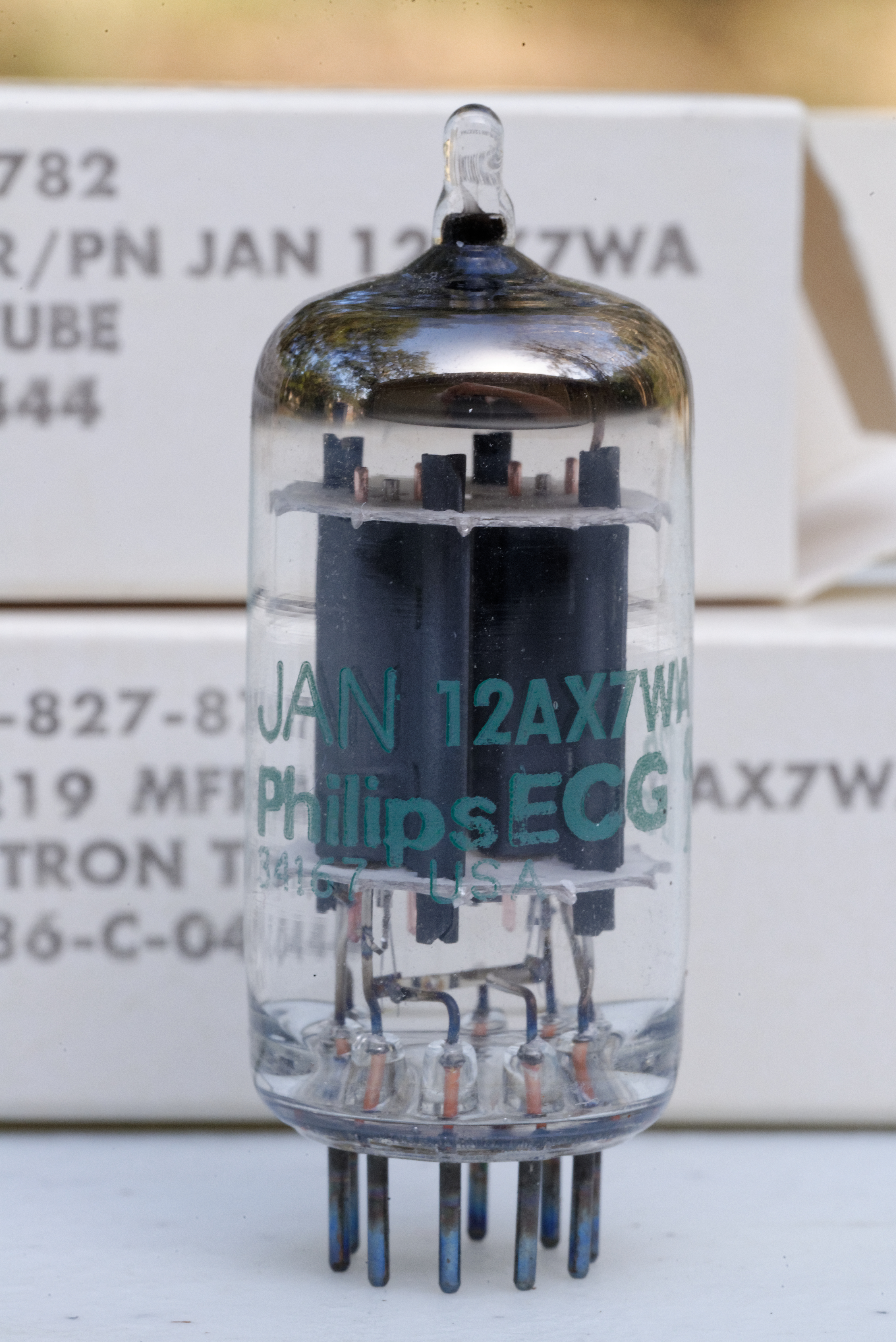 Vacuum Tube
Thermionic valve switching components (Philips 12AX7WA).
Wikipedia: Vacuum Tube
Wikimedia Commons File Record
Author: Wikimedia Commons contributors
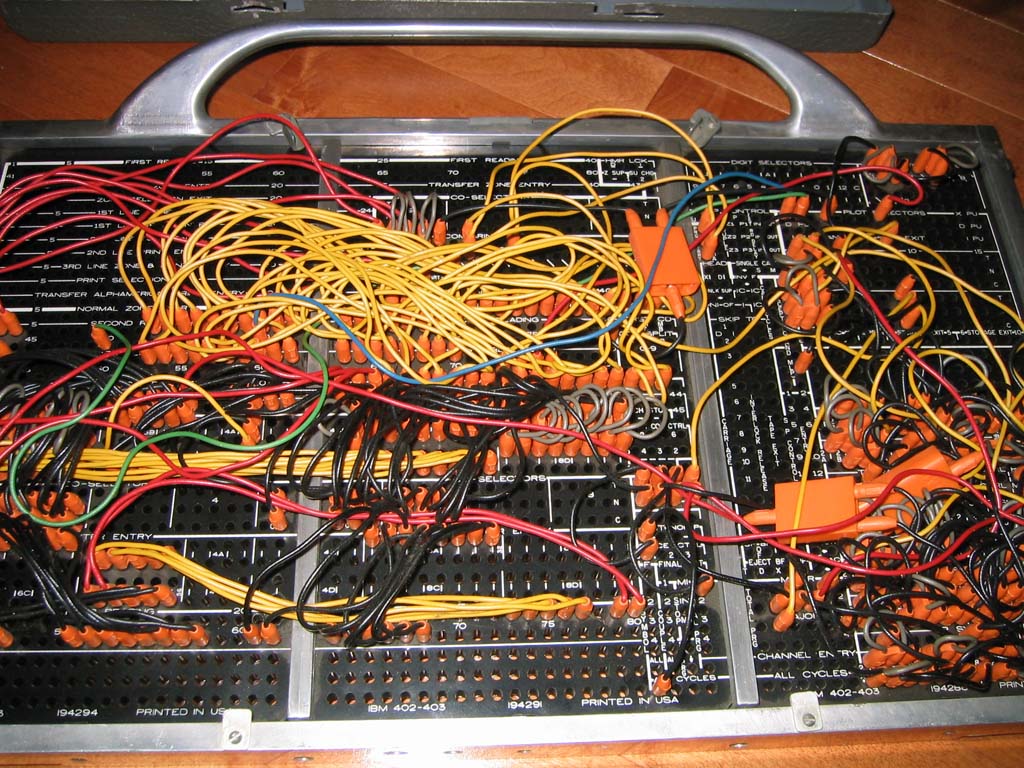 Plugboard Wiring
Manual machine programming interfaces (IBM 402).
Wikipedia: Plugboard
Wikimedia Commons File Record
Author: Wikimedia Commons contributors
Generation 2: Transistors & Batch Systems (1955–1965)
The invention of the transistor at Bell Labs introduced solid-state electronics, replacing fragile and heat-generating vacuum tubes with reliable semiconductor components. This dramatic improvement allowed computers to operate continuously without frequent catastrophic hardware failures, enabling commercial manufacture and widespread adoption across large enterprises and scientific research labs.
To bridge the immense speed disparity between rapid CPU instruction execution and slow mechanical I/O devices (like card readers and line printers), this era birthed batch systems controlled by early primitive monitor programs such as GM-NAA I/O, FMS (Fortran Monitor System), and IBSYS. Jobs were written to punched cards, collected into physical batches by human operators, transferred to magnetic tape offline via secondary satellite computers, and fed sequentially into the main mainframe under control of the resident monitor program. This automated job sequencing and system control effectively formed the earliest ancestor of modern operating systems.
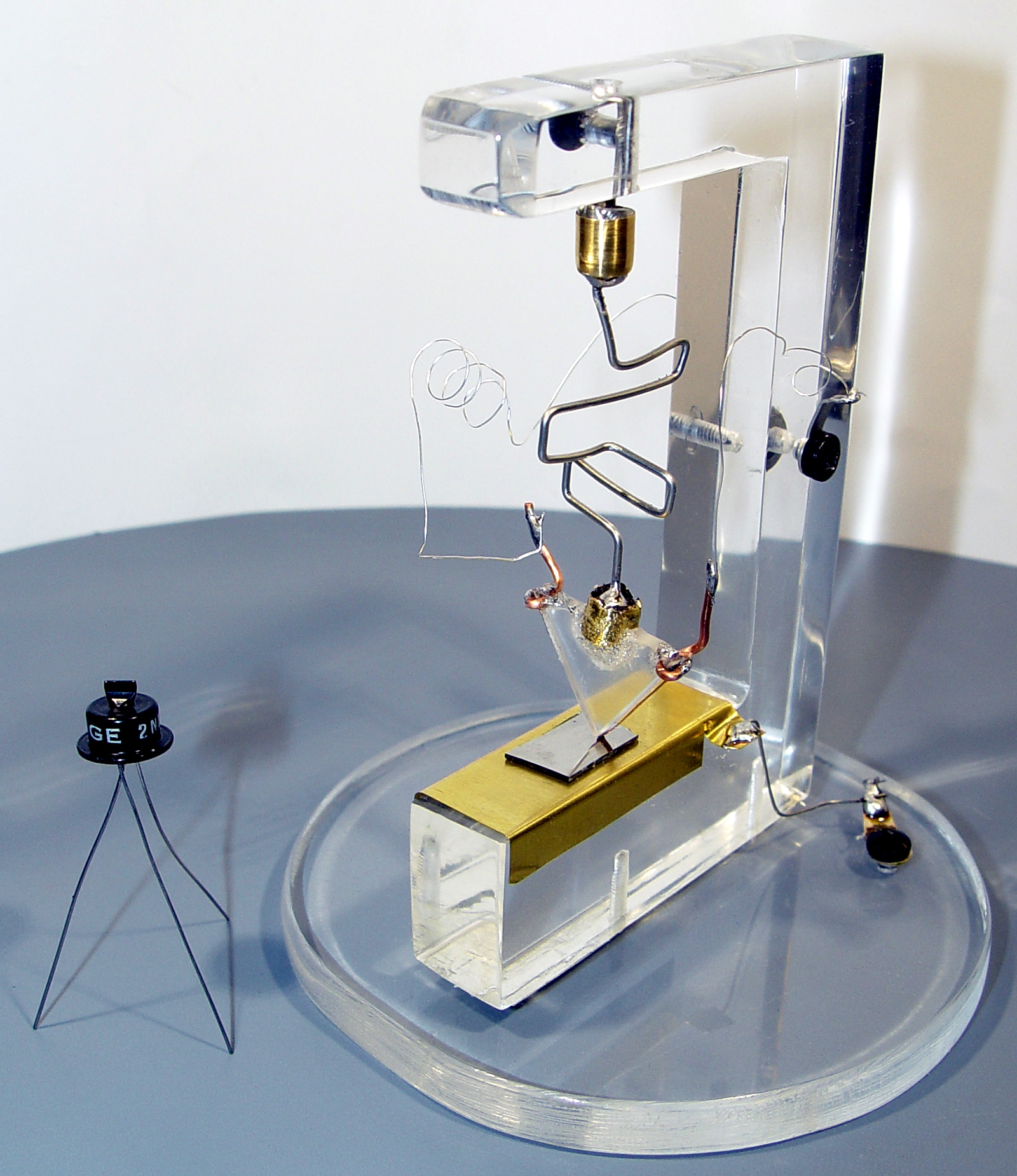 First Transistor
Solid-state semiconductor switching (Replica).
Wikipedia: Transistor
Wikimedia Commons File Record
Author: Wikimedia Commons contributors
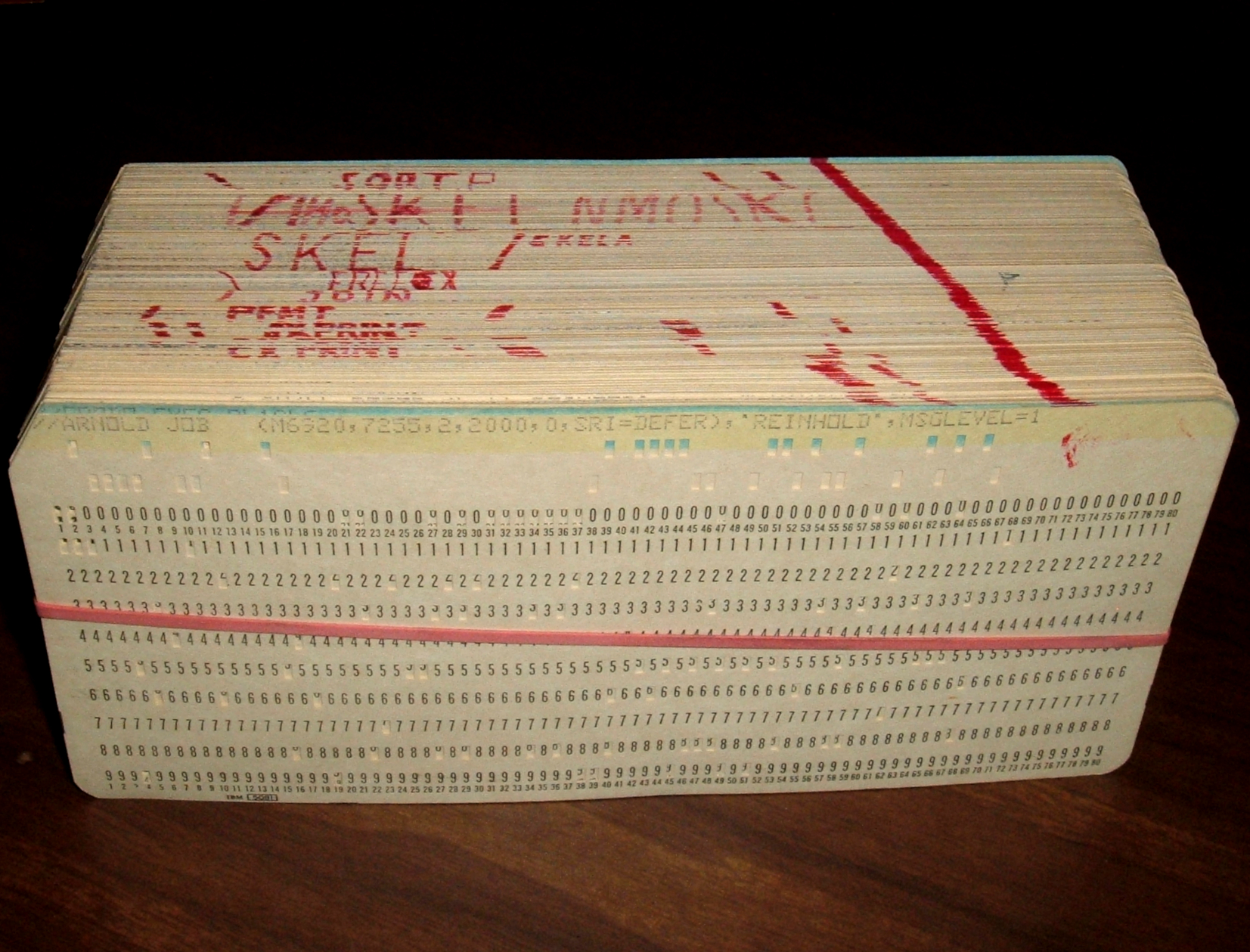 Punched Card Deck
Batch job submission media.
Wikipedia: Punched Card
Wikimedia Commons File Record
Author: Wikimedia Commons contributors (CC BY-SA 3.0)
Generation 3: ICs, Multiprogramming, & Time-Sharing (1965–1980)
The invention of the integrated circuit (IC) allowed dozens to hundreds of transistors to be etched onto a single silicon chip, dramatically reducing cost while increasing computational power. A major breakthrough was the introduction of the IBM System/360 in 1964, which unified scientific and commercial architectures under a single instruction set architecture (ISA) and gave birth to the massive OS/360 operating system.
To prevent expensive processors from idling while waiting for slow mechanical I/O operations to complete, this era pioneered multiprogramming—partitioning memory into several pieces so that when one job blocked waiting for I/O, the CPU immediately switched to another job. Furthermore, the development of interactive time-sharing systems (such as MIT's CTSS and the ambitious MULTICS project) enabled dozens of users to log in simultaneously via remote terminals, receiving fast conversational responses.
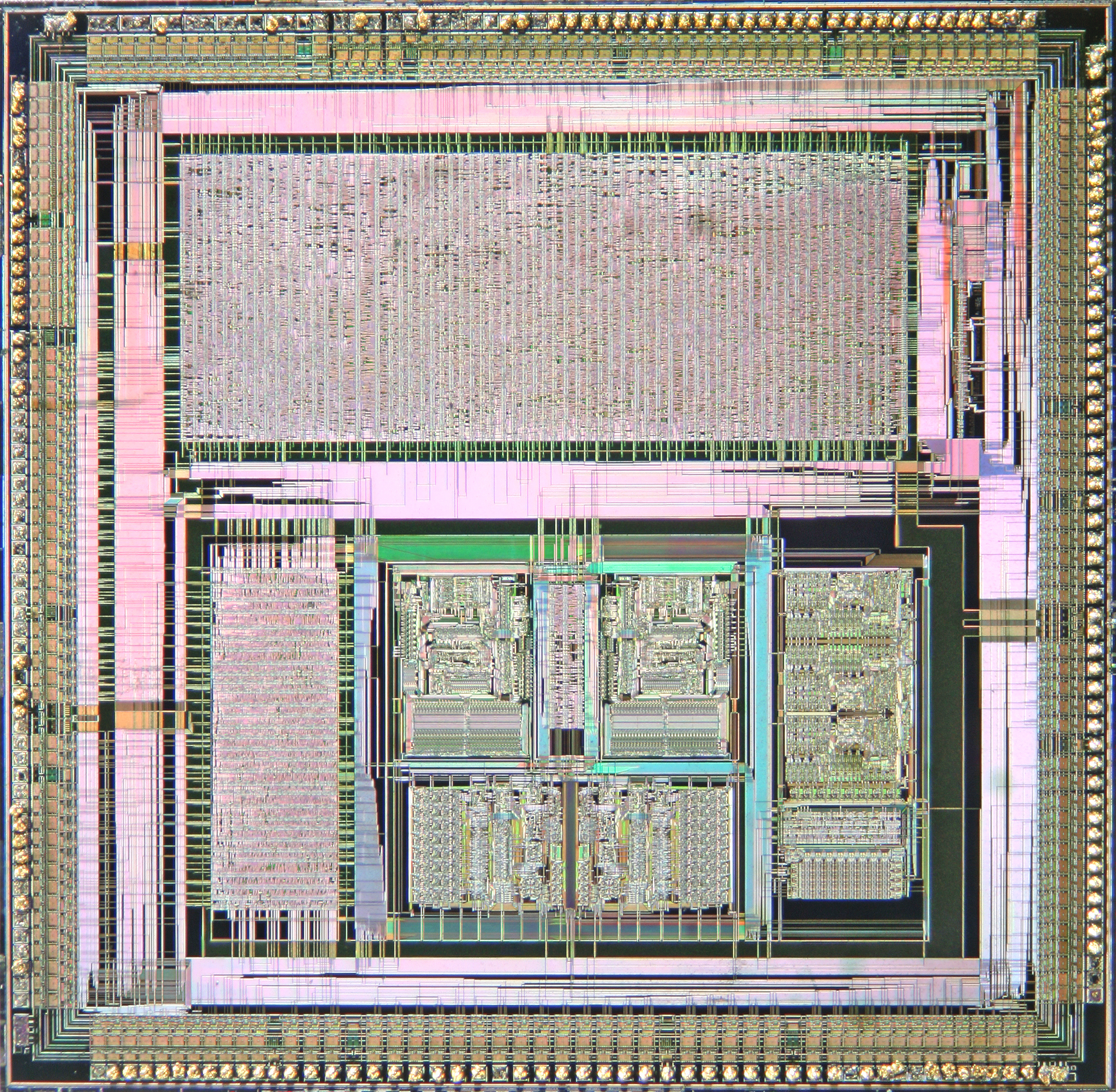 Integrated Circuit
Microchip scaling on silicon substrates.
Wikipedia: Integrated Circuit
Wikimedia Commons File Record
Author: Wikimedia Commons contributors (CC BY-SA 3.0)
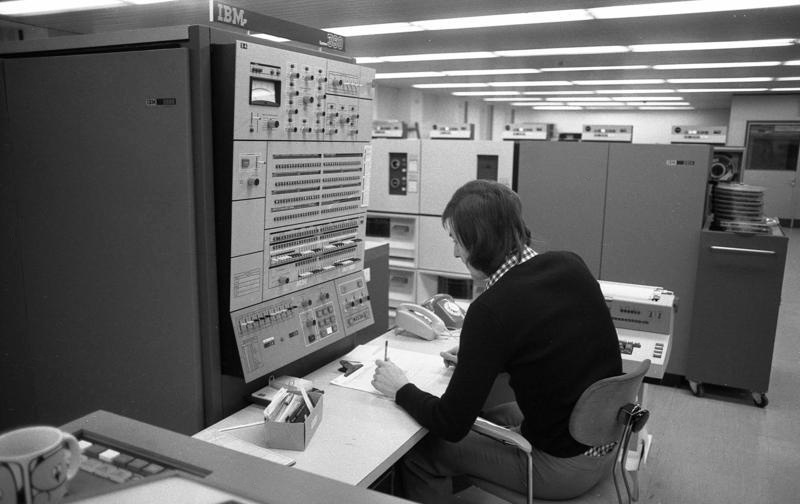 IBM System/360
Mainframe architecture family (VW-Werk Wolfsburg, 1973).
Wikipedia: IBM System/360
Bundesarchiv Record (B 145 Bild-F038812-0014)
Author: Schaack, Lothar / Bundesarchiv (CC BY-SA 3.0)
Generation 4: Personal Computers & Networks (1980–Present)
Large-Scale Integration (LSI) and Very Large-Scale Integration (VLSI) made microprocessors economically accessible, sparking the personal computer revolution. Operating systems shifted dramatically away from centralized multi-user mainframes toward responsive, single-user desktop environments designed for accessibility and personal productivity.
Key milestones and architectural shifts during Generation 4 include:
- Graphical User Interfaces (GUIs): Pioneered at Xerox PARC and popularized by the Apple Macintosh (1984) and Microsoft Windows (culminating in Windows 95), operating systems integrated visual window managers, icons, menus, and pointer (WIMP) paradigms, eliminating raw command-line dependency for everyday users.
- Networking & Distributed Architectures: Local Area Networks (LANs) and TCP/IP protocol stacks were integrated directly into operating system kernels, transforming isolated computers into interconnected nodes capable of network file systems and client-server workflows.
- Protected Memory & Preemptive Multitasking: Early single-tasking microcomputer OSs (like MS-DOS) gave way to robust 32-bit and 64-bit architectures (such as Windows NT, modern macOS, and Linux) featuring hardware-enforced memory protection, virtual memory paging, and preemptive task scheduling.
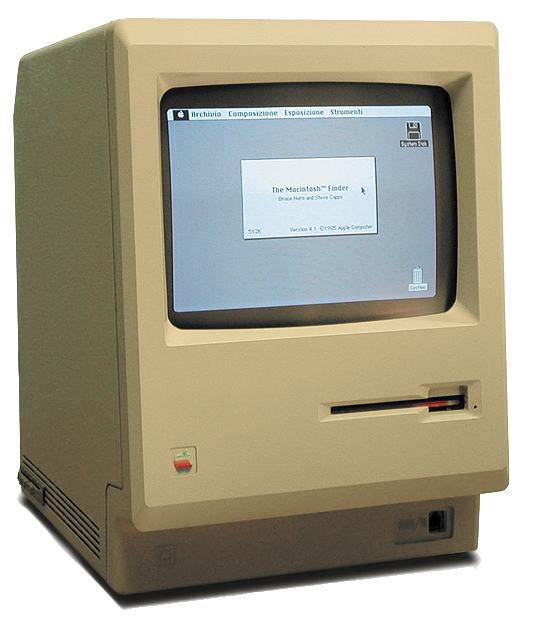 Macintosh 128k (1984)
Mass-market personal computer GUI environment.
Wikipedia: Macintosh 128K
Wikimedia Commons File Record
Author: AllAboutApple / Wikimedia Commons (CC BY-SA 2.5)
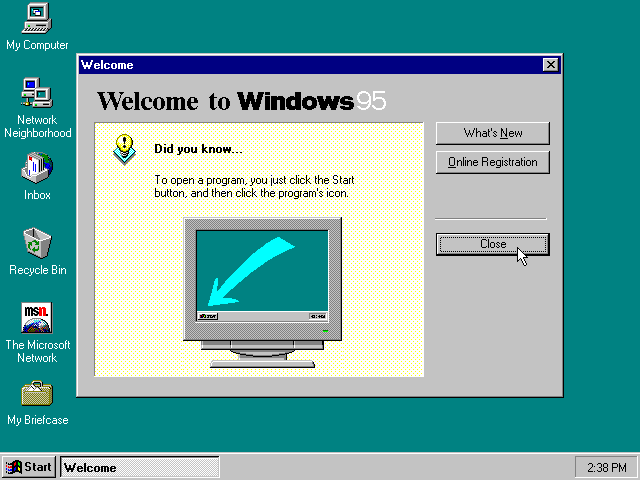 Windows 95 Desktop
32-bit consumer desktop with Start menu and taskbar.
Wikipedia: Windows 95
Wikimedia Commons File Record
Attribution: Microsoft Windows 95 OS
Generation 5: Mobile, Cloud, & Ubiquitous Computing (Present)
The contemporary computing era has shifted dramatically away from stationary desktop environments toward highly distributed, heterogeneous, and mobile ecosystems. Modern operating systems must span an immense spectrum of hardware scales—ranging from miniature battery-powered wearable sensors and smartphones to massive hyperscale cloud datacenters comprising millions of server cores.
Key architectural paradigms defining Generation 5 include:
- Mobile & Power-Aware Operating Systems: Platforms like Android and iOS introduced aggressive power management frameworks, thermal throttling, context-aware sensor integration, strict application sandboxing, and wireless cellular/Wi-Fi stack management to maximize battery longevity and user responsiveness.
- Cloud Computing & Hypervisors: Hyperscale cloud infrastructures rely on robust Type-1 hypervisors (such as KVM, Xen, and VMware ESXi) to virtualize compute, storage, and networking layers, allowing cloud providers to dynamically provision and migrate virtual machines across elastic server clusters.
- Containerization & Orchestration: Operating system-level virtualization through container runtimes (such as Docker) and orchestrators (such as Kubernetes) enables lightweight, isolated application packaging that shares a common host kernel, optimizing resource utilization and microservices deployment.
- Ubiquitous & IoT Computing: Billions of smart devices, industrial sensors, and embedded appliances run specialized lightweight real-time operating systems (RTOS) and micro-kernels (such as FreeRTOS or Zephyr) that integrate seamlessly into ambient networks with minimal memory and power footprints.
Andrew S. Tanenbaum created MINIX in 1987 as an educational operating system to illustrate microkernel design principles. MINIX served as the primary inspiration and initial development environment for Linus Torvalds when he began writing the Linux kernel in 1991.
Operating System Ecosystem & Architecture Families
The operating system landscape spans diverse paradigms. Below is the complete visual index of all 15 system brand marks and logos organized by architectural family.